Publications
Monographs | Book chapters | Journal articles | Code
A selection of my published research. For code, see my Codeberg repository.
📚 Monographs
Monograph
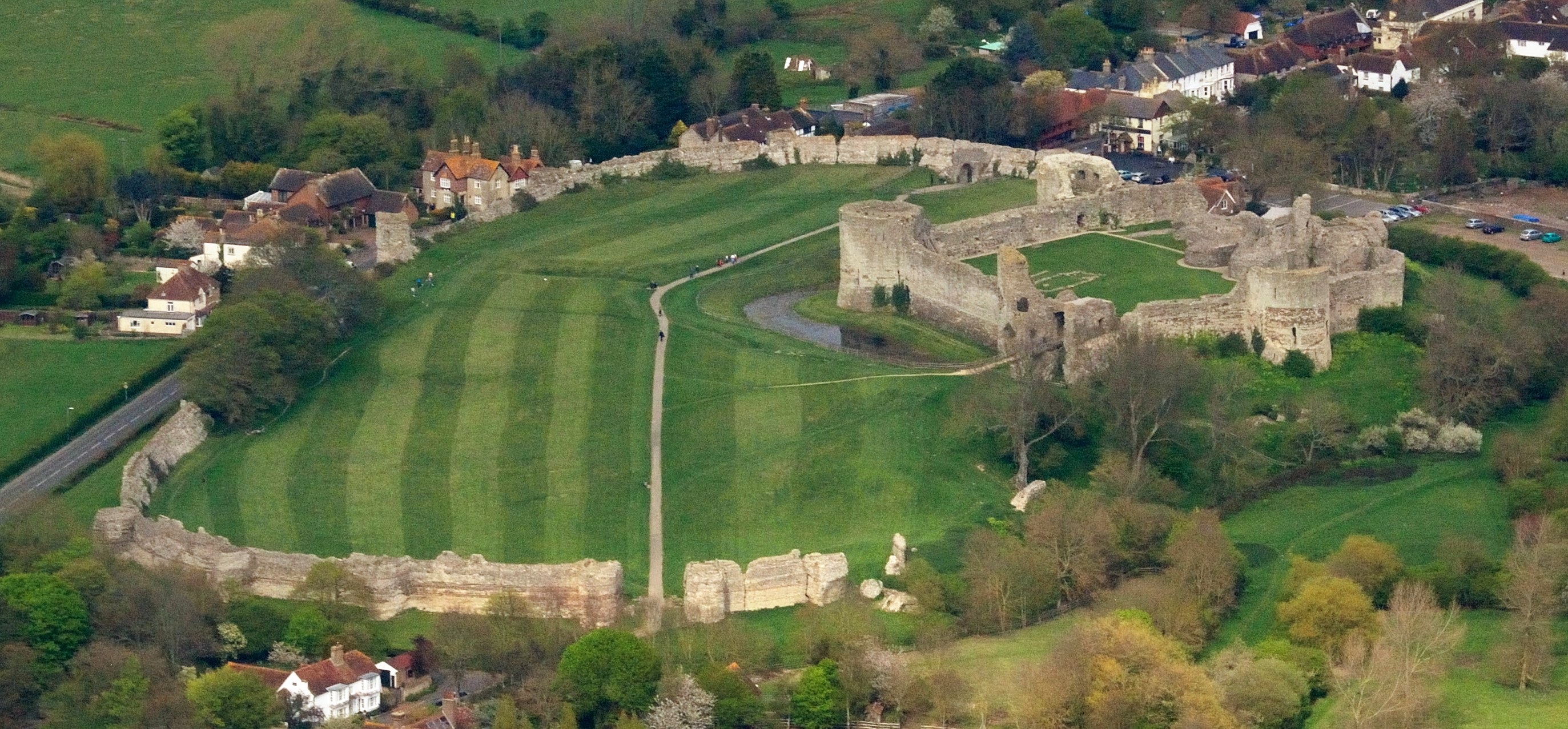
A Landscape Archaeology of Communities in Early Medieval Sussex
BAR, 2026 (forthcoming)
This book examines the material reflections of community identity and the dynamics of social change in the post-Roman southern Britain, with special reference to the area which would later become the ‘Anglo-Saxon’ kingdom of Sussex. A multi-scalar, geospatial approach is applied to produce original diachronic and qualitative distributional analyses of key artefact classes (coinage and portable metalwork) and micro-scale multivariate analyses of individual cemetery sites. Through the lens of socio-political interaction and kingdom formation, this research finally addresses the strategies communities pursue in mediating themselves, their lives, their descendants, and their ancestors in the world.
📖 Book chapters
Book chapter
"Waterways and Community Identities in Early Roman Sussex"
In Tibbs, A. and Campbell, J., (2023), Routledge
This chapter presents a geospatial and multivariate landscape study of regional and sub-regional community identities in southern England during the Romano-British period. The waterways of Britain have long been conceived as structuring the distribution patterns of archaeological material. The major rivers of central and south-eastern England, namely the area corresponding to the modern counties of Hampshire, West and East Sussex, should be thought of as of equal importance to the Roman road network as a routeway and communication system and was an arena for significant socio-political transformations. Within this novel geospatial frame of reference, correspondence and cluster analyses are applied to artefact distributions to produce new and more nuanced understandings of archaeological patterning and the potential strategies for signalling community identity.

Book chapter
"The last prince of Cardolan: Memory and mediation in the mortuary archaeology of Middle-earth"
In Barbini, F., Not the Fellowship, Dragons Welcome (2022), Luna Press
This paper analyses the character of the Barrow-wights, their setting, their historical context (both Middle-earth and contemporary Earth), and how the episode contributes to the narrative's themes of memory, mediation, and legitimacy. The materiality and the landscape of the Barrow-wight are discussed as a culmination of archaeological, historical, and mythic influences. Frodo, Sam, Merry, and Pippin encounter the Barrow-wights after they leave the house of Tom Bombadil (Tolkien 2007: 182-190). The Barrow-wights are corporeal undead that reside in a sub-region densely populated with burial mounds – the Barrow-downs, east of the Old Forest and south-west of Bree, in Eriador. After becoming trapped in the tomb widely interpreted as that of the last prince of the Arnorian kingdom Cardolan, the hobbits fall under the spell of a Barrow-wight and are in mortal danger. Tom Bombadil saves the fellowship, and the adventure continued. This paper argues that the barrows and the Barrow-wights, rather than simply clever pieces of world-building, are potent mnemonic devices reinforcing the power of memory, the danger of its loss, and can be viewed in contrast to the active acts of remembrance performed by the Rohirrim at the tombs of their kings outside Edoras (Tolkien 2007: 662).
📄 Journal articles
Journal article
"The power of the past: materialising collective memory at early medieval lordly centres"
Early Medieval Europe, vol. 34, no. 1, pp. 34-69, 2026
The repurposing of earlier sites and monuments is an enduringly popular theme in early medieval archaeology, but in England it has attracted little interest among Late Saxon and early post-Conquest studies. From the tenth century, however, an increasingly prevalent pattern is discernible of secular lords locating their power centres in relation to earlier features. A variety of evidence for such correlations is presented here, demonstrating reuse as an explicit strategy of aspirant lords who developed their private complexes with reference to a wide range of prehistoric, Roman, and earlier medieval antecedents. It is argued that the tumultuous political conditions around the turn of the first millennium intensified elite engagement with material signatures of the past, which they curated in efforts to shape collective memory and buttress their authority.
Journal article
"Where power lies - The arcaheology of transforming elite centres in the landscape of Medieval England c. 800-1200"
Medieval Settlement Research, vol. 39, pp 80-92, 2024
‘Where Power Lies: The Archaeology of Transforming Elite Centres in the Landscape of Medieval England c. AD 800-1200’ was a joint project between Newcastle University, the University of Exeter and the Portable Antiquities Scheme (PAS) that answered key questions regarding the earliest medieval lordly centres. The project, which ran from November 2022 to April 2024, employed a range of archaeological, historical and geographical methodologies to map and explore sites on a range of scales, from region-wide studies to site-specific investigations. It had a particular emphasis on exploring locations where there is evidence for an aristocratic residence and contemporary church combined, as it is these places that we can best trace a wide range of elite investment over time.
Journal article
"Where power lies: Lordly power centres in the English Landscape c. 800-1200"
The Antiquaries Journal, 2024, vol. 104, pp 72-106
Toward the end of the first millennium ad, a burgeoning class of secular elites emerged throughout western Europe who developed local power centres to denote their prestige. Seigneurial investment was prioritised towards residences, as well as churches and chapels, the two elements often paired into single places in the landscape. In England, our understanding of these complexes is limited due to scant excavated evidence and skewed by the impact of the Norman Conquest, after which castles became the dominant form of aristocratic site. Previous approaches have often fetishised defensibility and promoted notions of national exceptionalism, but a more meaningful understanding of these places can be gained by adopting a broad chronological and thematic remit. Drawing upon the results of the AHRC-funded research project ‘Where Power Lies’, this paper offers a foundational evaluation of the landscape evidence for lordly centres, presenting data on their distribution in two regions, complemented by results from intensive investigation of case study locations (Bosham, West Sussex and Hornby, North Yorkshire). This allows a wider range of material signatures from lordly centres to be characterised, resulting in greater comprehension of how elites in England shaped and experienced a Europe-wide phenomenon.